
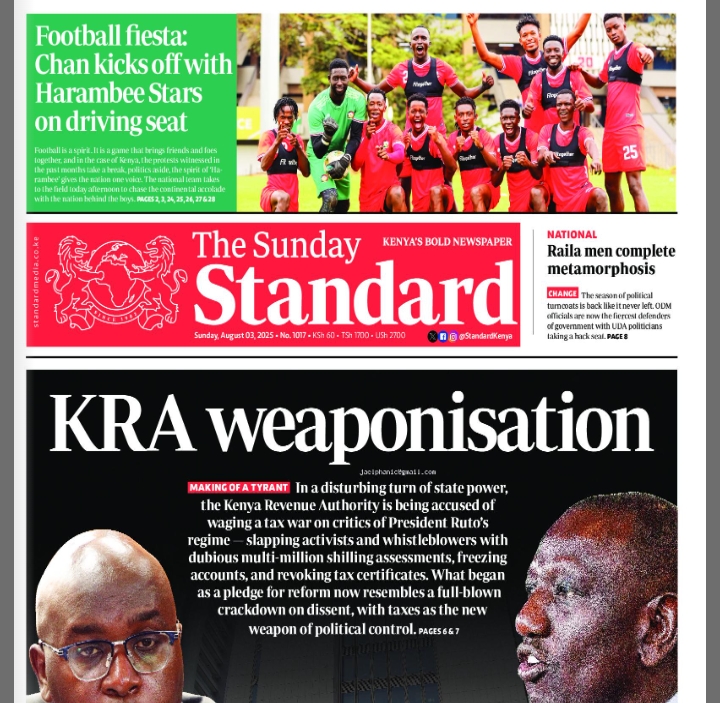
Analysis Of The Standard Newspaper
TONE
The tone of The Standard is predominantly critical and investigative, particularly toward the government’s actions. It adopts a skeptical stance on issues like KRA’s alleged political targeting and NYS mismanagement, using strong language such as “weaponization of tax enforcement” and “systemic irregularities.” However, it balances this with a more neutral, even hopeful tone in sports coverage, emphasizing national unity during Chan 2024 despite underlying political tensions.
TRACK
The newspaper consistently tracks themes of governance, corruption, and political strategy, positioning itself as a watchdog. It highlights contradictions in President Ruto’s reform promises, such as the crackdown on dissent versus earlier pledges of transparency. The sports section serves as a diversion but still ties back to politics, noting controversies like ticket hoarding and Ruto’s financial incentives for the team.
FRAMING
Stories are framed to emphasize conflict and accountability, portraying the government as increasingly authoritarian (e.g., KRA’s audits, NYS scandals). Political shifts, like Raila allies joining Ruto, are framed as betrayals, reinforcing narratives of opportunism. Even sports coverage is politicized, with the Chan tournament framed as both a unifying event and a tool to distract from anti-government dissent.
EDITORIAL AGENDA
The editorial agenda prioritizes exposing corruption and holding power to account, evident in the focus on KRA’s tactics and NYS audit findings. It also seeks to highlight political realignments, such as Kalonzo’s potential co-optation and Ruto’s maneuvering in Mount Kenya. While providing sports updates, the paper subtly links them to broader socio-political issues, ensuring its watchdog role remains central.
CONCLUSION
The Standard positions itself as a critical observer of Kenya’s political landscape, scrutinizing the Ruto administration’s credibility and governance flaws. Its coverage blends investigative rigor with strategic framing, ensuring readers view even political events through a socio-political lens. Ultimately, the paper reinforces a narrative of democratic backsliding, corruption, and political manipulation, while cautiously acknowledging moments of national unity.