
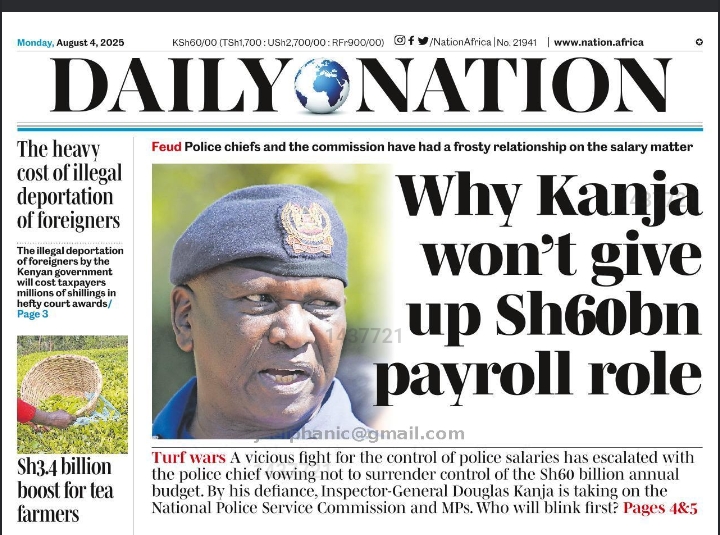
Analysis Of The Daily Nation Newspaper -04,2025
TONE
The tone of The Daily Nation on August 4, 2025, is predominantly critical and investigative, particularly when addressing government inefficiencies and corruption, such as the police payroll dispute and the “ghost schools” scandal. However, it adopts a celebratory and optimistic tone when covering Kenya’s Chan victory and grassroots achievements, like Jane’s efforts in Turkana. The mix of urgent condemnation (e.g., illegal deportations) and hopeful reporting (e.g., tea sector reforms) reflects a balanced yet assertive editorial stance.
TRACK
The newspaper consistently tracks governance and accountability, evident in its coverage of the Inspector-General vs. NPSC feud and the stalled Mwananchi Gas Project. It also follows socio-political developments, such as Ruto’s re-election challenges and opposition coalition fractures, suggesting a focus on long-term political trends. Additionally, it prioritizes human interest stories, like the music festival and Harambee Stars’ success, to engage a broad readership.
FRAMING
Stories are often framed around conflict, such as institutional power struggles (police payroll) and political rivalries (2027 elections), emphasizing tension and stakes. Economic and policy issues, like the GOE Bill and tea sector reforms, are framed as opportunities for progress, appealing to reform-minded audiences. Meanwhile, human rights abuses (e.g., Ekunpa’s deportation) are framed as systemic failures, urging legal and moral accountability.
EDITORIAL AGENDA
The paper prioritizes anti-corruption and governance reforms, seen in its scrutiny of the “ghost schools” scandal and demands for EACC investigations. It also advocates for policy transparency, as highlighted by the GOE Bill’s merit-based appointments, aligning with its push for institutional accountability. Additionally, it celebrates national pride and grassroots achievements, reinforcing a narrative of resilience amid systemic challenges.
CONCLUSION
The Daily Nation on August 4, 2025, balances investigative rigor with patriotic storytelling, holding power to account while celebrating national milestones. Its focus on corruption, governance, and political dynamics underscores a commitment to watchdog journalism, while human interest and sports coverage ensure broad reader engagement. The paper reflects Kenya’s complex socio-political landscape, blending critique with hope for reform.