
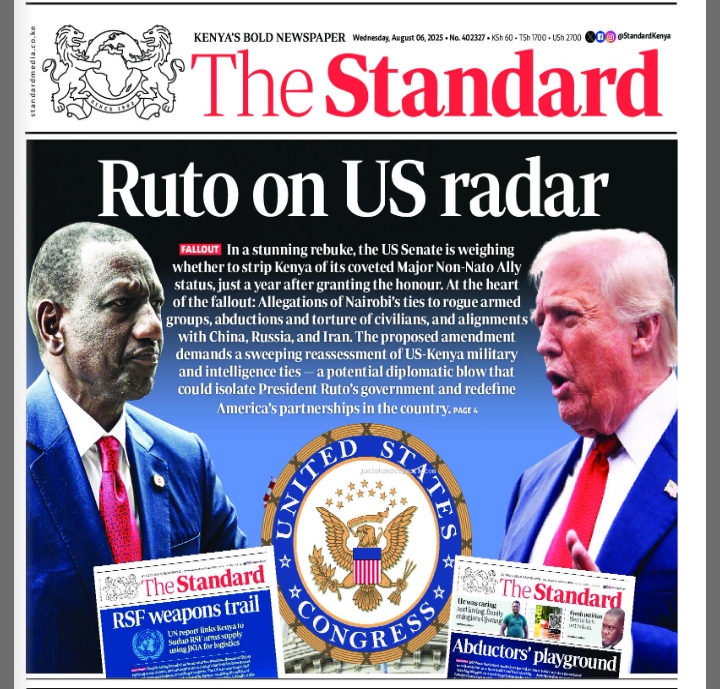
Analysis Of Tone and Perspective Review Of The Standard Newspaper -Aug 06,2025
TONE
The tone of The Standard newspaper is predominantly critical and apprehensive, particularly in its coverage of political and diplomatic issues. It adopts a cautionary stance when discussing Kenya’s potential loss of US ally status and systemic corruption, while also expressing frustration over governmental inefficiencies. However, it balances this with moments of optimism, such as in sports reporting, where it celebrates national achievements.
TRACK
The newspaper consistently tracks themes of governance failures, diplomatic tensions, and accountability, as seen in its focus on the US Senate’s scrutiny of Kenya and the e-Citizen corruption scandal. It also follows political rivalries, such as Raila Odinga’s NGCDF opposition, and social issues like bribery and public health. Sports and international developments, like the plastic treaty talks, provide a secondary but recurring narrative thread.
FRAMING
The Standard frames its stories to emphasize conflict and urgency, particularly in political and economic coverage, such as the Treasury’s defiance of Parliament or the Hustler Fund’s financial unsustainability. It often positions the government as either negligent or adversarial, while portraying citizens and oversight bodies as striving for accountability. In sports and global affairs, the framing shifts to highlight resilience and opportunity, such as Kenya’s athletic ambitions or environmental negotiations.
EDITORIAL AGENDA
The editorial agenda prioritizes exposing corruption, advocating for transparency, and holding leaders accountable, as seen in its scrutiny of the e-Citizen scandal and bribery reports. It also pushes for constitutional and policy reforms, particularly in devolution and public health, while subtly critiquing Kenya’s foreign alliances. The agenda aligns with a pro-democracy, anti-corruption stance, though it occasionally leans into nationalist pride in sports and cultural achievements.
CONCLUSION
The Standard serves as a watchdog, blending investigative rigor with advocacy for governance reform and public welfare. Its critical tone and conflict-driven framing underscore its role in challenging authority, while its coverage of sports and global issues offers a reprieve from hard news. Ultimately, the paper reinforces a narrative of Kenya at a crossroads, grappling with internal dysfunction while striving for progress on the world stage.