
Analysis Of Tone and Perspective Review Of The Daily Nation Newspaper -Aug 17,2025
TONE
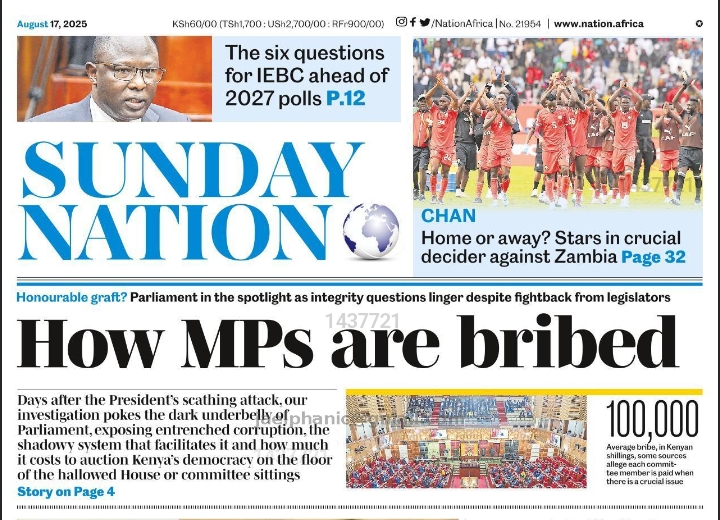
The tone of The Daily Nation newspaper roundup is predominantly investigative and critical, particularly when addressing corruption and systemic failures in government institutions. It adopts an inspirational and hopeful tone when highlighting human-interest stories, such as Sauda Abbas Shehuna’s efforts to empower girls through football. However, a somber and urgent tone emerges in reports on tragedies, such as the Kisumu bus crash, and systemic neglect, like the plight of neonatal nurses.
TRACK
The newspaper consistently tracks governance issues, particularly corruption in Parliament and public institutions, reinforcing a narrative of systemic dysfunction. It also monitors progress in sectors like education (TSC’s digital transfer system) and sports (Harambee Stars’ performance), balancing negative revelations with positive developments. Additionally, it follows geopolitical dynamics, such as U.S.-Russia-Ukraine relations, maintaining a broad yet focused coverage spectrum.
EDITORIAL AGENDA
The editorial agenda reflects the priorities and perspectives of a publication, shaping the topics it emphasizes and the stance it takes on key issues. By focusing on specific themes such as politics, social justice, or economic trends the agenda influences public discourse and guides readers’ understanding of current events. Ultimately, it serves as a strategic tool to align content with the publication’s mission, values, and target audience, while also reinforcing its brand identity and credibility.
FRAMING
The framing often positions political and institutional actors (MPs, governors, IEBC) as either corrupt or inept, reinforcing public distrust while calling for accountability. Human-interest stories, like Lamu Queens Football Club, are framed as triumphs of resilience against cultural and systemic barriers. Sports coverage is framed optimistically, using national team success to foster unity and pride, contrasting sharply with the critical lens applied to political reporting.
CONCLUSION
The roundup concludes by emphasizing the persistent challenges facing Kenya, from political corruption to infrastructural neglect, while also spotlighting individual and collective efforts driving change. It suggests that systemic reforms, such as TSC’s digital system and IEBC’s electoral preparations, are steps in the right direction but insufficient without broader accountability. Ultimately, the coverage leaves readers with a mix of caution and hope aware of deep-rooted issues but reminded of potential progress through sports, grassroots activism, and institutional overhauls.