
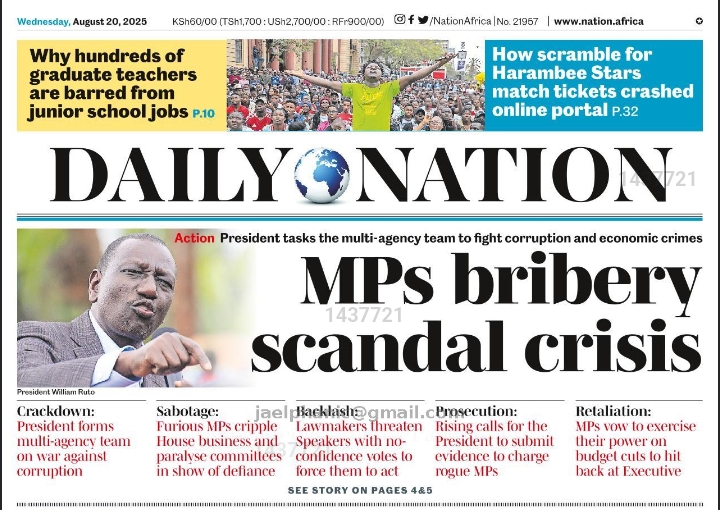
Analysis Of Tone and Perspective Review Of The Daily Nation Newspaper -Aug 20,2025
TONE
It is predominantly objective and formal, reporting on political conflict, judicial rulings, and social issues with a measured and factual demeanor. However, a subtle undercurrent of gravity and concern is present when detailing crises like parliamentary paralysis, corruption risks, and the demands of protest victims, stopping short of overt alarmism. This creates a sober and serious atmosphere, positioning the publication as a credible and authoritative source of information on weighty national affairs.
TRACK
The selection of stories, reveals a clear editorial focus on governance, accountability, and the rule of law as the day’s defining themes. The lead stories on the executive-legislature clash, the clearance of the Deputy Chief Justice, and the impending gubernatorial impeachment trial establish a central narrative of institutions in conflict and under scrutiny. This is consistently supported by tracks on corruption in donor funds, judicial upholding of contracts, and citizen demands for justice, painting a comprehensive picture of a nation grappling with power, integrity, and legal processes.
FRAMING
Events consistently emphasizes institutional processes and official responses, often structuring stories around the actions and reactions of government bodies. The political crisis is framed as a clash between branches of government, the impeachment as a procedural question for the Senate, and the scam calls as data from a World Bank survey, lending each issue a structural rather than a purely emotional context. This framing choices suggest a priority on explaining the mechanisms of power and accountability how a petition is dismissed, how a trial will be conducted, how compensation is being negotiated over sensationalizing the human drama alone.
EDITORIAL AGENDA
It is to foreground issues of constitutionalism, anti-corruption, and effective governance as the most pressing matters facing the nation. By leading with the political confrontation and dedicating significant coverage to judicial and audit findings, the paper advocates for transparency and institutional integrity by default. The agenda is not expressed through overt opinion but is advanced through the prominence given to stories that question the use of power and the adherence to legal and financial rules.
CONCLUSION
This edition presents a nation at a contentious crossroads, where its democratic institutions are being actively tested from within through political rebellion and from without through demands for justice. The overarching narrative is one of a system under strain, simultaneously attempting to uphold the rule of law through its courts while seeing its political norms break down in its parliament. The collective reporting suggests that Kenya’s immediate future hinges on its ability to navigate these profound challenges of accountability, corruption, and institutional trust.