
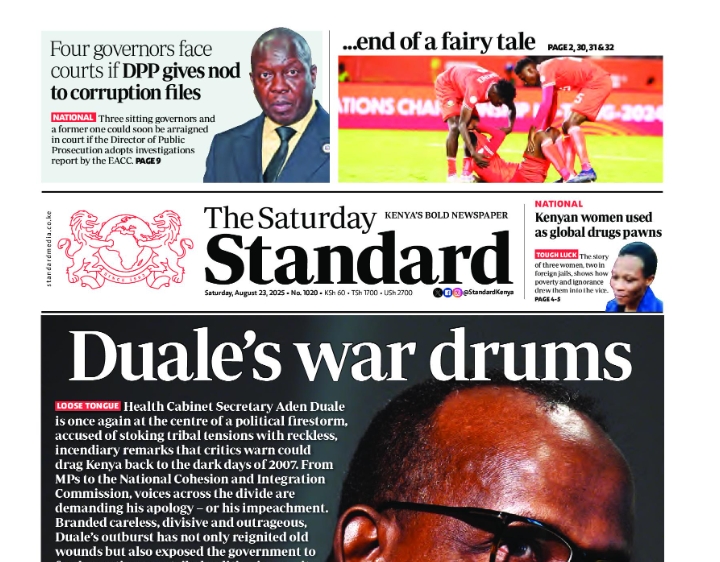
Analysis Tone and Perspective Review Of The Standard Newspaper
TONE
The language is often severe, using words like “reckless,” “divisive,” “devastating,” and “heartbreaking” to convey a sense of crisis and institutional failure across various sectors. This tone establishes a posture of holding power to account, reflecting public dismay towards the government and other powerful entities.
TRACK
The track, or the selection of stories, reveals an editorial focus on governance, corruption, and social justice. Front-page issues like the CS’s inflammatory remarks, the witness protection failure, and the hospital funding crisis are tracked alongside continued coverage of corruption investigations and a community land rights dispute. This creates a narrative track that consistently follows themes of accountability, the abuse of power, and the resultant consequences for ordinary citizens.
FRAMING
The framing of these stories consistently positions the government and its agencies as the primary antagonists or sources of failure. The healthcare crisis is framed as a government-made problem, the tribal remarks are framed as a dangerous governmental misstep, and the boundary dispute is framed as the state defying the judiciary. This framing sets up a clear conflict between the people and those in power, portraying citizens from threatened bloggers to struggling hospital owners as victims of systemic negligence or malice.
EDITORIAL AGENDA
The newspaper’s editorial agenda is evidently centered on advocacy for transparency, accountability, and good governance. It aggressively highlights governmental shortcomings, from corruption and unethical remarks to financial mismanagement and ignoring court orders, while also giving prominence to civil society and institutional voices of condemnation like the NCIC and EACC. This agenda serves to position the publication as a watchdog and a voice for public interest against perceived state failure.
CONCLUSION
The Standard presents a nation grappling with significant political and social challenges orchestrated by its leadership. The overall narrative is one of a country being let down by its institutions, from the highest offices of government to protective agencies, threatening both national cohesion and public welfare. Despite this bleak outlook, the agenda finds balance by also tracking positive stories of international partnership, cultural achievement, and sporting excellence, offering glimpses of national pride and potential.