
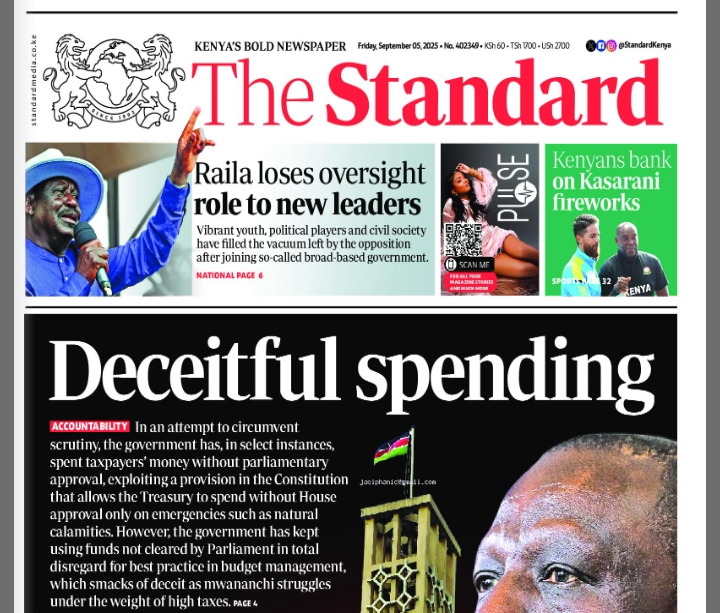
Analysis of The Standard Newspaper
TONE
The newspaper’s tone is predominantly critical and accusatory, holding powerful institutions to account. It conveys a sense of public outrage and betrayal, particularly towards the government’s financial mismanagement and unfulfilled promises. The language is assertive and unflinching, painting a picture of a nation struggling under poor governance and systemic failure.
TRACK
The publication consistently tracks themes of governance, accountability, and social justice across its pages. It diligently follows the flow of public funds, from unauthorized national spending to crippling county and school debts, creating a cohesive narrative of financial malpractice. Furthermore, it tracks the societal consequences of these failures, from healthcare tragedies to the erosion of public services.
FRAMING
The stories are framed through the lens of the citizen versus the powerful, positioning the government and connected elites as antagonists against the struggling public. Issues are presented not as isolated incidents but as symptoms of a broader breakdown in accountability and ethical leadership. This framing creates a clear dichotomy between the actions of the ruling class and the resulting hardships faced by ordinary Kenyans.
EDITORIAL AGENDA
The editorial agenda is clearly focused on advocating for transparency, fiscal responsibility, and robust oversight of those in power. It champions the role of civil society, the youth, and the media as essential checks on a government that operates without an effective formal opposition. The selection of stories promotes a agenda of reform, justice for victims, and the protection of public resources from exploitation.
CONCLUSION
In conclusion, this edition of The Standard presents a damning indictment of the current administration and broader governance structures. It concludes that the nation is grappling with a profound crisis of accountability, where financial impropriety and failed leadership directly harm public welfare and stifle progress. Ultimately, the paper positions itself as a vital voice for the people, documenting their struggles and demanding answers from those in power.