
TONE
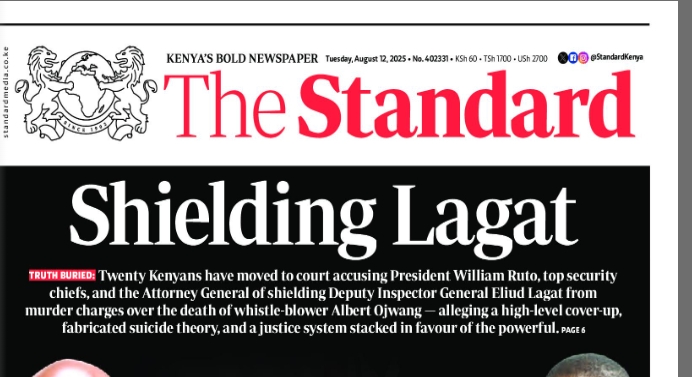
The tone of The Standard is predominantly critical and investigative, particularly when addressing government accountability and human rights issues. It adopts a somber and urgent tone in covering alleged injustices, such as the Ojwang’ murder case and prison abuses, while shifting to celebratory and hopeful tones for stories like the Kenyatta University victory or sports achievements. The paper balances condemnation of systemic failures with praise for resilience and progress, reflecting a nuanced emotional range.
TRACK
The newspaper consistently tracks themes of justice, governance, and social equity, revisiting unresolved cases like Ojwang’s death and DIG Lagat’s reinstatement. It also monitors political fractures, such as the DAP-K leadership rift, and economic shifts like Equity Group’s financial strategy, demonstrating a commitment to follow-up reporting. Sports and culture are recurring tracks, highlighting both Kenya’s competitive edge and societal inclusivity.
FRAMING
Stories are framed to emphasize systemic issues, such as impunity (Ojwang’s case), rights violations (school pregnancy tests), and institutional abuse (prisons), often positioning victims against powerful entities. Achievements, like the visually impaired students’ win or Harambee Stars’ victory, are framed as triumphs over adversity, reinforcing narratives of resilience. Political and economic coverage leans toward conflict framing, depicting power struggles and strategic maneuvering.
EDITORIAL AGENDA
The editorial agenda prioritizes holding authorities accountable, as seen in its focus on alleged cover-ups, police misconduct, and legal injustices. It advocates for marginalized groups, spotlighting abuses in schools and prisons while celebrating underrepresented voices. The agenda also promotes national pride through sports and cultural milestones, though not at the expense of critical scrutiny.
CONCLUSION
The Standard delivers a blend of hard-hitting exposés and uplifting human-interest stories, maintaining a watchdog role while fostering national identity. Its tone and framing reveal a commitment to justice and equity, though occasionally leaning into sensationalism for high-stakes conflicts. Ultimately, the paper balances critique with celebration, reflecting Kenya’s complex socio-political landscape.