
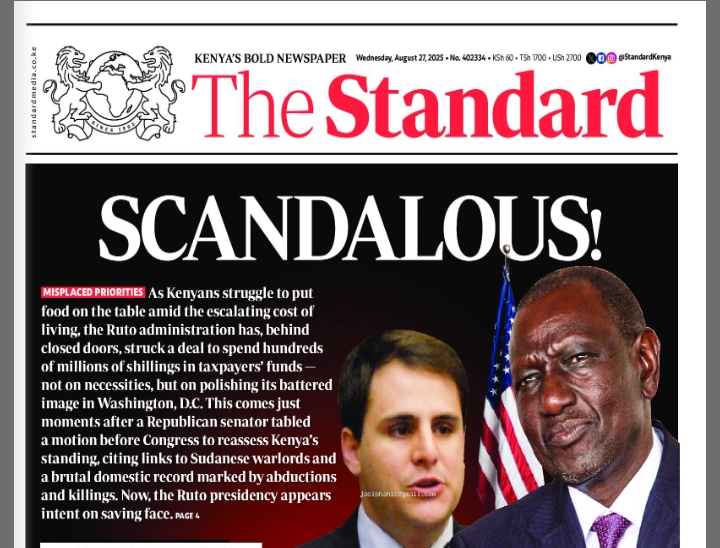
Analysis of The Standard Newspaper
TONE
The tone of the newspaper is predominantly critical and accusatory, holding the government and powerful institutions to account for mismanagement and ethical breaches. It adopts a tone of public advocacy, expressing indignation on behalf of citizens affected by corruption, state negligence, and the high cost of living. A secondary tone of resilience is present in reports on civil society struggles and sporting achievements, providing a counterbalance to the overarching narrative of failure.
TRACK
The publication’s track is firmly focused on investigative and watchdog journalism, meticulously tracing the flow of public funds to expose alleged corruption and financial mismanagement at the highest levels. It consistently tracks the abuse of executive power, from historical constitutional manipulation to present-day scandals involving lobbying and land alienation. Furthermore, it tracks human interest stories, connecting systemic institutional failures to their direct, distressing impact on ordinary citizens.
FRAMING
The stories are framed to emphasize a stark contrast between a self-serving political elite and a suffering populace, positioning government actions on lobbying and assets as priorities misplaced during a severe domestic crisis. Issues are frequently framed as systemic and historical, such as depicting the constitution as a product of betrayal and current scandals as part of a long pattern of elite manipulation. The framing often creates a narrative of David versus Goliath, pitting vulnerable communities, grieving families, and underfunded public bodies against powerful, unaccountable government officials and business interests.
EDITORIAL AGENDA
The editorial agenda is clearly centered on promoting transparency, accountability, and good governance by relentlessly highlighting perceived corruption and administrative failures within the Ruto administration and other state agencies. It advocates for the protection of public assets and taxpayer funds, questioning expensive foreign contracts and the controversial sale of state-owned enterprises. The agenda also supports constitutionalism, the rule of law, and social justice, giving voice to marginalized communities and recalling the historical struggle for democratic reforms.
CONCLUSION
In conclusion, this edition of The Standard presents a nation grappling with a crisis of leadership, where alleged government corruption and financial prioritization of international image over domestic welfare are dominant themes. The overall conclusion drawn from the collective reporting is that Kenya’s institutions are severely compromised, failing to serve the public effectively and perpetuating a cycle of historical injustice and mismanagement. Ultimately, the paper paints a picture of a resilient but besieged citizenry demanding accountability and ethical governance from its leaders.